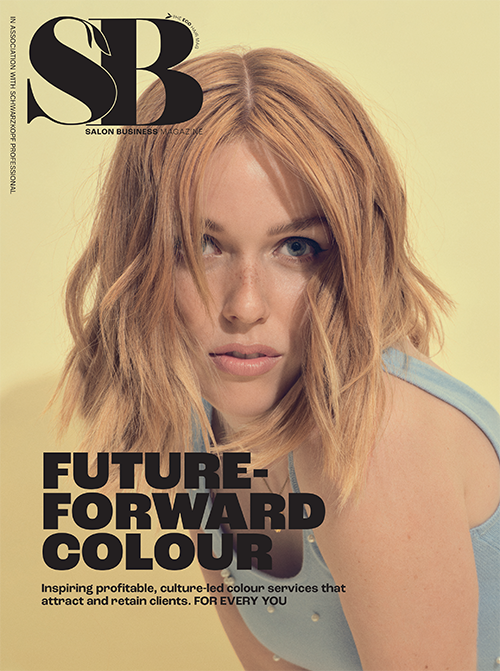



Suzie McGill’s Colour Correction Confidence


The Rainbow Room Artistic Directors’ Expert Guide to Perfecting Tone and Restoring Balance.
Colour correction is one of the most rewarding and challenging parts of our craft. It requires a deep understanding of tone, pigment, and hair condition, as well as the confidence to make decisions that restore harmony to the hair. Whether you’re dealing with over-toned blondes, stubborn box dyes, or unwanted banding, the goal is always the same: healthy, even, beautiful colour that enhances your client’s natural beauty. Here’s my advice for tackling three of the most common correction challenges in the salon.
1. Correcting Over-Toned Hair
Over-toning is a frequent issue, particularly when clients or even stylists overuse purple or blue shampoos. The result is often dull or overly ashy tones that lack vibrancy.
To correct this, first assess the level and underlying pigment of the hair. A gentle clarifying treatment can help remove surface build-up and reveal the true tone underneath. From there, I like to reintroduce warmth gradually using a demi-permanent gloss or a low-ammonia toner in peach, gold, or soft beige hues.
This step restores balance and brightness without over-processing the hair, leaving it glossy and multidimensional rather than flat or greyed-out.

2. Lifting Box Dye
Box dyes are one of the toughest corrections to manage due to their heavy pigments and metallic salts, which can create unpredictable results when lightened. The key is patience and precision.
Start with a thorough consultation and strand test; you need to understand exactly how the hair will react before proceeding. I always recommend working in stages rather than attempting to lift too much in one go. Using a professional colour remover can help eliminate artificial pigment safely before introducing any lightener.
Once the underlying colour is exposed, apply a targeted lightening technique such as balayage to lift and blend, maintaining the integrity of the hair. Always finish with a conditioning treatment and a gloss to neutralise warmth and add shine.

3. Removing Banding
Banding is another common correction challenge, often the result of overlapping colour or uneven application over time. It can make even the most beautiful shade look patchy or artificial.
To remove banding, start by identifying the darkest or most uneven areas and target those first. Apply a gentle lightener or colour remover specifically to the banded sections, avoiding the healthier, even-toned hair. Once lifted, tone the entire head with a cohesive glaze to create a seamless blend.
Balayage and root-stretching techniques can also help visually soften and disguise any stubborn bands while maintaining a natural, dimensional finish.

Successful colour correction is as much about care and communication as it is about technique. Always take the time to understand your client’s colour history, manage expectations, and focus on hair health above all else. When done thoughtfully, correction work not only transforms the colour, but it also rebuilds confidence and trust in the stylist.

More Info
Online: www.rainbowroominternational.com
Insta: @suziemcgillhair_